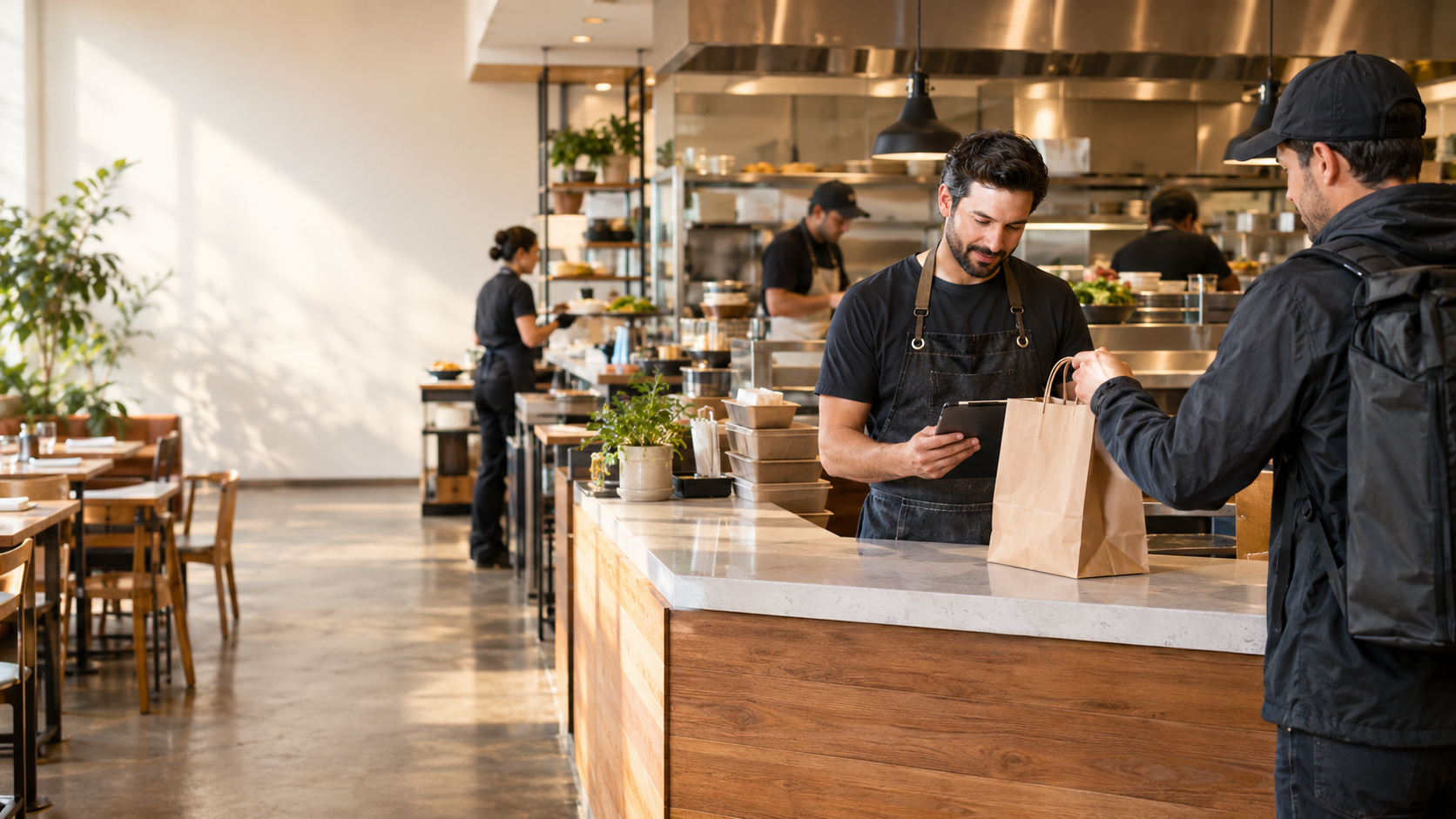
Make direct ordering easy to find
Make your direct ordering page easy to reach wherever customers encounter your restaurant. Put an ordering widget or prominent button on your website, especially on mobile. Add a QR code to receipts and packaging that takes customers straight to the ordering page. Check that the code works before you print a large batch.
Give customers the same path when they find you elsewhere. Add your ordering link to your Google Business Profile where available and place it in your social media bios. Then test one placement at a time. For example, use a distinct QR code on receipts for two weeks and count the orders it brings in. Compare that result with the cost of printing the receipts so you can decide whether to keep using the placement.
Turn first-time orders into repeat customers
Give first-time delivery customers a reason to order again with a reward you can afford to repeat. Try a digital punch card that offers a free side after four orders above a minimum spend. Check the food, packaging, and delivery costs before setting the threshold so those orders cover the reward.
Reach lapsed customers with a specific offer. With their permission, send an SMS or email to customers who have not ordered in 21 days. You could offer $5 off a weekday family meal above $30, limit the offer to one use, and compare the resulting orders with the discount and messaging costs.
Test local promotions in one delivery area at a time. Offer a limited-time dinner bundle in a nearby ZIP code and promote it through a neighborhood newsletter or location-targeted social ad. Track which customers order again after trying the bundle. Repeat orders will tell you more about the promotion than initial redemptions alone.
Set delivery zones and menu offerings that protect margin
A delivery zone should reflect what you can deliver on time at a workable cost. Wider zones can bring in more orders, but longer trips may raise courier charges and delay arrival. Check recent orders by distance, delivery time, and fee. If the outer edge of your zone performs poorly, test a smaller radius or a higher delivery fee for distant addresses.
Set a minimum order size only after checking what customers typically buy. A minimum can help cover the fixed cost of sending a driver, but a high threshold may turn away smaller orders. Test a threshold near your current average ticket and watch both completed orders and profit per order.
Keep delivery items that hold up during the trip. Fries that arrive soggy or ice cream that melts can disappoint customers even when the driver arrives on time. Before adding an item to the delivery menu, test it after a typical trip and account for its container, preparation time, and any extra packing labor when setting its price.
Keep fulfillment reliable as order volume grows
Reliable delivery requires enough driver capacity for your busiest hours, not just your average day. Review orders by hour and day of week, then schedule coverage around recurring peaks. Arrange backup drivers before a rush so one absence or a sudden batch of orders does not force you to cancel deliveries.
As volume grows, coordinate kitchen timing with driver availability. If a driver arrives before an order is ready, the delay can carry through later stops. Set delivery estimates based on actual prep and travel times, and tell customers promptly when an order runs late. Late or canceled orders can make customers less willing to order again.
Track missed pickups, late arrivals, and cancellations each week. Those records help you decide whether to add peak-hour coverage, adjust delivery hours, or change how many orders you accept at once.
Track the true cost of every delivery order
Track the costs behind each delivery order so you can tell which channels and promotions leave money after fulfillment. For each channel, divide total delivery fees, commissions, packaging costs, and incremental prep labor by its number of orders. Add average food cost per order and any discounts. Compare that total with the channel’s average ticket, adding any delivery charge your restaurant keeps.
For example, a $30 order with $8 in food costs, $5 in delivery fees, $4 in commission, $2 in packaging, and $3 in incremental labor leaves $8 before rent and other fixed costs. A $3 coupon lowers that amount to $5. Review those figures by channel and promotion each month so you can see whether an offer brings in orders that still cover their costs.
Why FIRST Delivery supports these five moves
FIRST Delivery brings third-party marketplace orders into one place. If you promote direct ordering through your website, packaging, or local offers, your store can manage the orders those efforts generate alongside third-party marketplace orders.
For delivery coverage, FIRST Delivery offers access to nationwide third-party fleets and the option to use dedicated drivers. You can assess those options against the zones you serve and the coverage you need during busy hours. Its live support gives stores and diners a point of contact when an order needs attention. When you track per-order costs, factor in the applicable delivery rate and check how refund protection applies to your orders.
Learn more about FIRST Delivery if those options fit your delivery plans.